
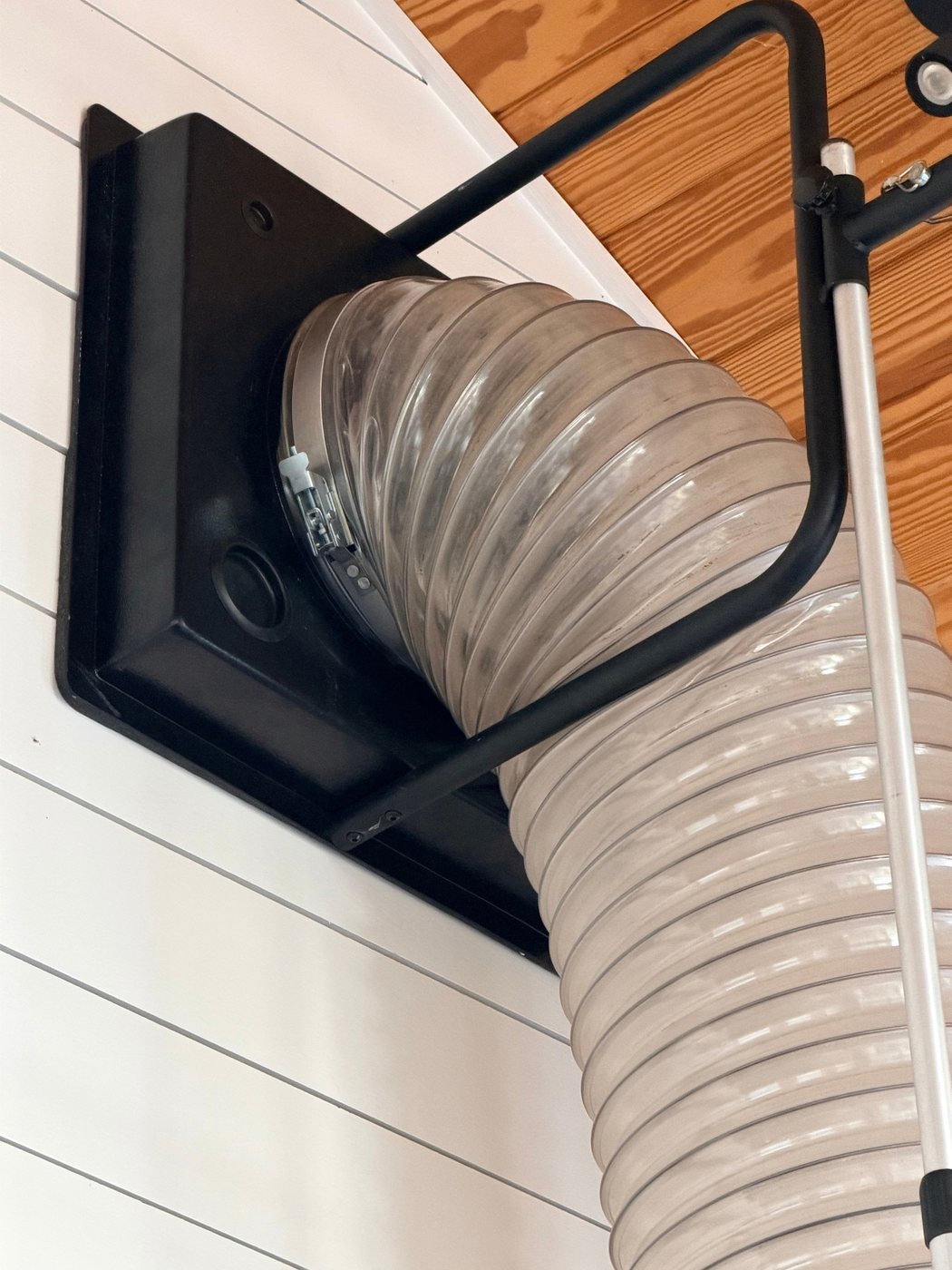
Duct cleaning in a manufactured home isn’t the same job as in a site-built house. The ductwork usually runs under the floor, inside the home’s underbelly, where it’s exposed to moisture, rodents, and damage you can’t see from inside. That’s why we always inspect before we clean, and why sometimes the honest answer is repair or replacement instead.
How a mobile home duct system works
Most single-wide and double-wide homes use a belly duct system: a main trunk line running the length of the home inside the insulated underbelly, between the floor and a protective sheet called the bottom board. Floor registers connect straight down to that trunk. Double-wides add a crossover duct, usually a flexible duct running underneath the home, to carry air from one half to the other.
Because the ducts sit under the floor, dirt, pet hair, and debris fall straight into floor registers. Moisture and pests from the crawlspace can get in if the bottom board is damaged.
The four ways belly duct systems fail
1. Crossover duct damage or disconnection
The crossover duct on a double-wide is exposed under the home. It can sag, tear, get crushed, or come loose, sending conditioned air into the crawlspace. The tell-tale sign is one half of the home that never cools or heats well.
2. Torn or missing bottom board
The bottom board protects the ducts and insulation. When it tears, rodents, insects, and humid air get into the belly. Rodent nesting near the ducts is one of the most common problems we find.
3. Separated register boots and trunk seams
The connections between floor registers and the trunk line loosen over time, especially as the home settles. Gaps leak air into the underbelly and pull in insulation fibers and dust.
4. Moisture and mold
Water from plumbing leaks, AC condensate, or ground moisture can soak the duct and the insulation around it. Wet, moldy duct insulation can’t be cleaned effectively and needs to be replaced, according to the EPA.
Why we camera-inspect first
You can’t see a belly duct’s condition from the floor registers. Before we quote, we run a camera through the trunk line and check the crossover duct from underneath. That tells us whether the system needs cleaning, sealing, a crossover replacement, or a full duct replacement, and we show you the footage. A complete intrusive video camera inspection is $300, and every photo and video is emailed to you after the service.
Clean, repair, or replace?
| Condition we find | What we recommend |
|---|---|
| Dust and debris, ducts intact and dry | Cleaning |
| Loose register boots or small seam leaks | Cleaning plus sealing |
| Crushed, torn, or disconnected crossover | Crossover replacement |
| Rodent nesting in a limited area | Cleaning, sanitizing, and bottom board repair |
| Widespread water damage, mold, or rusted trunk | Duct replacement |
Cleaning a duct that’s crushed or rusted through costs you money without fixing the problem. We’ll tell you which category your home falls into before you spend anything.
Why it matters
ENERGY STAR estimates a typical home loses 20–30% of the air moving through its ducts to leaks and poor connections (ENERGY STAR). In a manufactured home, where the ducts sit in the underbelly, a disconnected crossover or torn trunk can lose far more of the air you’re paying to heat and cool.
See our duct cleaning packages or our mobile and modular home HVAC service.