
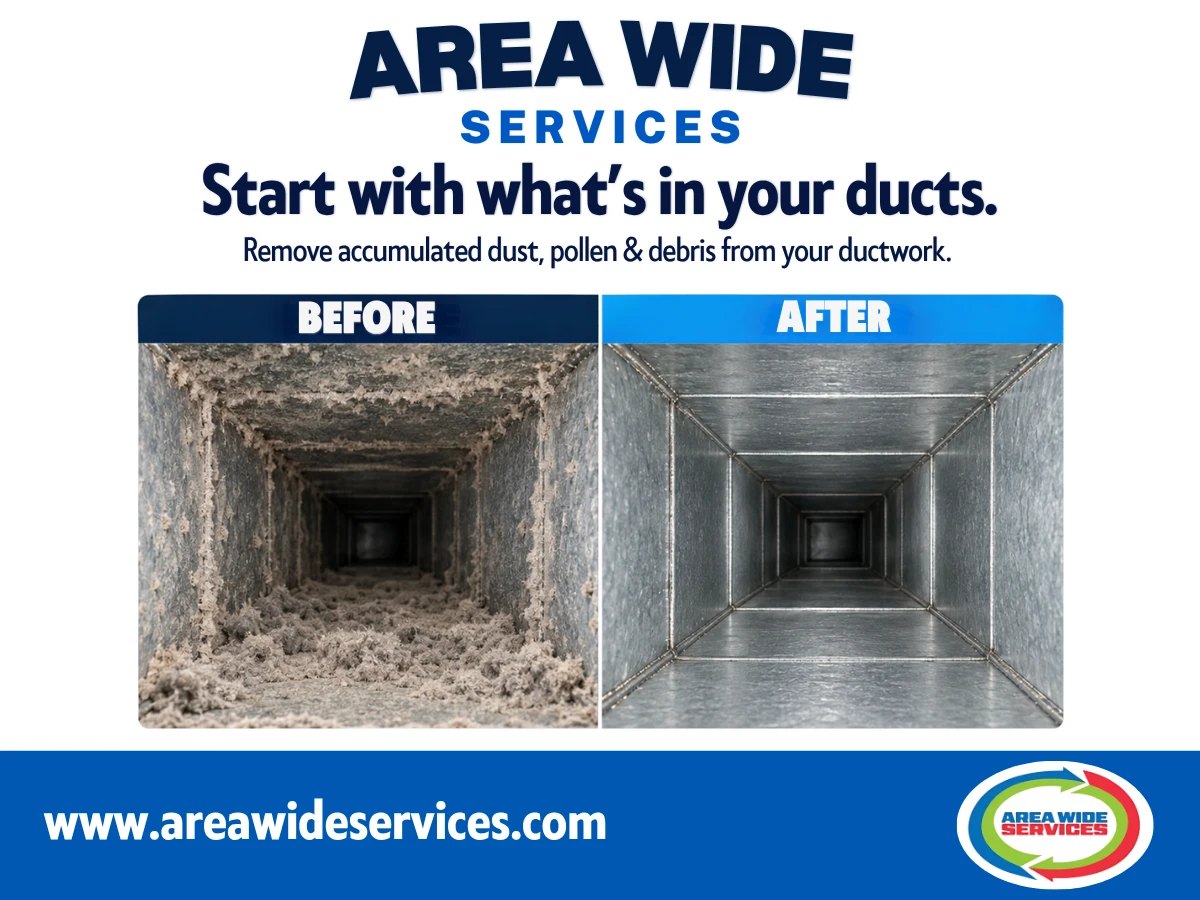
Your heating and cooling system can move all the air in your home through its ducts several times a day. Those ducts run behind walls, above ceilings, and under floors, so most of us never see inside them. Yet every bit of dust, pet hair, and pollen that gets past your air filter, or settles in from a leaky joint, has somewhere to go. This fall, as the windows close and the furnace kicks on for the first time, it’s worth knowing what could be inside.
What’s Really in Your Air Ducts?
Ducts aren’t sterile, and they don’t need to be. A normal amount of dust is just part of living in a home. But over the years, a few things tend to collect:
| What you may find | How it gets there |
|---|---|
| Dust and dirt | Everyday particles from open doors, windows, and foot traffic settle on duct surfaces. |
| Pollen and outdoor allergens | Plant spores tracked in on shoes and clothing or pulled in through ventilation. |
| Pet dander and hair | Skin flakes and fur shed by cats and dogs are light enough to travel through the system. |
| Mold spores and fungi | Can grow if moisture, condensation, or high humidity gets into the ductwork. |
| Insect and rodent droppings | Waste or nesting material left behind if pests find their way into the ducts. |
| Microscopic fibers | In some older systems, aging fiberglass duct liner or insulation can shed small particles. |
These categories line up with what the EPA and other industry sources describe, including ATI Restoration and Trane.
Why Fall and the Holidays Make It Matter More
Between now and New Year’s, most of us spend a lot more time inside. The windows stay shut, the heat runs more often, and the house fills up with guests, cooking, and pets curled up by the vents. That changes how much your ducts are working and how much you notice what’s circulating.
- First heat of the season: The first time your furnace runs after a long Texas summer, it can push around dust that settled in the ducts over the last several months.
- Outdoor allergens: Fall pollen, including ragweed, and mold spores outdoors can hitch a ride inside on shoes, clothes, and pets, and cedar pollen season follows in many parts of Texas.
- More time at home: More hours in a closed-up house means more exposure to whatever is already indoors.
- Hosting season: Holiday visitors, extra cooking, and company in every room put extra demand on your system just when you want the house to feel its best.
Will Duct Cleaning Help With Allergies?
Here’s the honest answer: it depends on what’s in your ducts and what’s causing your symptoms. Allergies have plenty of sources, including bedding, carpet, pets, and outdoor air, and no one can promise that cleaning your ducts will end them.
The EPA says duct cleaning “has never been shown to actually prevent health problems,” and that it should be done as needed rather than routinely. (Source: EPA.) We agree with that approach. If your ducts are clean, we’ll tell you so. If they’re carrying a heavy buildup of dust, dander, or pollen, cleaning removes a source of allergens that keeps getting stirred back into your living space. For someone already dealing with seasonal sneezing and congestion, that is one less thing to worry about.
Signs It May Be Time to Clean Your Ducts
Dusty vents alone don’t mean your ducts are clogged. These are the things we look for:
- Visible mold growth on or around ducts or vents, or a persistent musty smell when the system runs.
- Signs of pests, such as droppings, nesting material, or unusual odors from the vents.
- Heavy dust or debris blowing out of the registers when the system turns on.
- Allergy-type symptoms that seem worse at home than away, especially seasonally.
- A recent remodel, renovation, or water damage that may have put construction dust or moisture into the system.
- Pets that shed heavily, or ducts that haven’t been inspected in several years.
As a general guideline, many homes benefit from a duct cleaning every three to five years, sooner if any of the signs above apply.
What a Professional Duct Cleaning Looks Like
Not every duct cleaning is done the same way, and a poor job can do more harm than good. Here’s how ours works:
- Full system inspection: We inspect your supply and return lines and equipment before we touch anything, so you know what we found.
- Negative-pressure cleaning: High-powered, negative-pressure vacuum equipment pulls buildup out of the system without spreading dust through your home.
- Optional sanitizing: If you’d like it, we can add a sanitizing and deodorizing treatment.
- Final walkthrough: We show you the results, including before-and-after comparisons, so you can see what was removed.
Most residential jobs take two to four hours, and our team is a NADCA member with Air Systems Cleaning Specialist and Ventilation System Mold Remediator credentials. You can add dryer vent cleaning to any package. Learn more on our duct cleaning page.
Clean Ducts Are One Piece of Better Indoor Air
Ducts are only part of the picture. Changing your furnace filter every one to three months, sealing leaky ductwork, and keeping humidity in check all help. If allergens are a concern, upgraded filtration, an air purifier, or a UV light can make a difference too. Ask about a whole-home air quality assessment on our indoor air quality page.
Comfort Club Members Save on Duct Cleaning
If you’re already enrolled in our Comfort Club, you save 15–20% on duct cleaning and air quality services, on top of the priority scheduling and repair discounts that come with your plan. Not a member yet? See our Maintenance Plans and bundle your fall tune-up with a duct inspection.
Duct Cleaning Across Central Texas
From our headquarters in Corsicana, our crews clean ducts in homes across six counties. If you’re in one of these communities, we’re local:
| County | Cities we serve |
|---|---|
| Navarro County | Corsicana (headquarters), Kerens, Blooming Grove |
| Ellis County | Ennis, Waxahachie |
| Kaufman County | Mabank |
| Henderson County | Athens, Malakoff |
| Freestone County | Fairfield, Teague |
| Limestone County | Mexia |
Not sure whether we cover your address? Give us a call and we’ll let you know.
Frequently Asked Questions
Do you offer duct cleaning near me?
We clean ducts throughout Navarro, Ellis, Kaufman, Henderson, Freestone, and Limestone counties, including Corsicana, Ennis, Athens, Waxahachie, Mabank, Malakoff, Fairfield, Teague, Mexia, Kerens, and Blooming Grove.
How often should air ducts be cleaned?
For most homes, every three to five years is a good guideline. Homes with pets, allergy sufferers, recent renovations, or visible dust buildup may benefit from more frequent service. The EPA recommends cleaning only as needed, so an inspection is the best place to start.
Can dirty air ducts make allergies worse?
Ducts can hold dust, dander, pollen, and mold spores, and the air in your home passes through them. Whether that affects your symptoms depends on how much has built up and what you’re sensitive to. No one can guarantee cleaning will eliminate allergy symptoms, but removing a heavy buildup takes one potential source off the list.
How long does duct cleaning take?
Most residential jobs take two to four hours and are finished in a single visit. Larger homes or systems with mold, heavy debris, or damage can take longer.
How much does duct cleaning cost?
Pricing depends on the number of AC systems and vents or registers in your home, plus any added needs such as mold, heavy debris, or odors. Call us for a quote or request one online.
How do I know if my ducts need cleaning?
Look for visible mold, signs of pests, heavy dust blowing from the vents, a musty smell, or allergy symptoms that are worse at home. If you’re not sure, we’ll inspect your system and show you what we find before recommending anything.
Schedule Your Duct Cleaning Before the Holidays
Fall is a smart time to get this done, before the guests arrive and the heat runs full-time. Whether you’re in Corsicana, Ennis, Athens, or anywhere in between, call Area Wide Services for an honest inspection and a clear quote, with no pressure.
Call 903-874-5298 or request a quote online, and ask about Veteran and First Responder discounts.